Before the main action
The West Side's Decline
On [Manhattan's West Side](entity:location-recall-location-cf522cc57219), crowded, deteriorating housing and scarce opportunities leave residents feeling trapped. Landlords profit from overcrowding while political leaders remain distant, and street gangs become an everyday force in neighborhood life.
The arrival of Puerto Rican families gives the white gangs a target for their existing anger. Their rivalry is sustained by ethnic prejudice and the struggle for territory, even as the violence makes the neighborhood dangerous for everyone.
About four months before the opening
Tony Leaves the Jets
After years as a leading member of the Jets, [Tony Wyzek](entity:character-recall-character-tony-wyzek-fdd91d91eee3) grows dissatisfied with the gang's life and the limits of what it offers him. He leaves leadership behind and takes a job at [Doc's drugstore](entity:location-recall-location-doc-033f5724f089), hoping to discover a purpose beyond fighting and belonging to the gang.
His withdrawal unsettles his friends, particularly [Riff Lorton](entity:character-recall-character-riff-lorton-b4eb2fb8b864), who has taken over as leader. Tony still cares about the Jets, but he is trying to imagine a freer life and is reluctant to return to the violence that once defined him.
About a month before the dance
Maria Arrives in New York
[Maria Nunez](entity:character-recall-character-maria-nunez-0e07a3f1b4cd) arrives from [Puerto Rico](entity:location-recall-location-f4ad4d273466) to join her parents and family in [New York](entity:location-recall-location-new-york-f84f7f10ee10). She has been separated from them while they established themselves, and the crowded apartment and unfamiliar city make her new life feel both exciting and confining.
She longs to speak English like the Americans around her and hopes that life in New York will bring possibilities unavailable at home. Her brother [Bernardo](entity:character-recall-character-bernardo-772d6a8ed262), however, greets the city with resentment and distrust, convinced that its white residents reject Puerto Ricans.
Soon after Maria Nunez arrives
Chino's Marriage Proposal
[Chino Martin](entity:character-recall-character-chino-martin-dda3bc08adca), [Bernardo](entity:character-recall-character-bernardo-772d6a8ed262)'s quiet friend and a hardworking apprentice, has lent the family money to help bring [Maria Nunez](entity:character-recall-character-maria-nunez-0e07a3f1b4cd) to [New York](entity:location-recall-location-new-york-f84f7f10ee10). He wants to marry her, and their families treat the proposed match as sensible and secure.
[Maria](entity:character-recall-character-maria-de0c38967fe7) appreciates Chino but does not feel the passion she imagines love should bring. Bernardo supports the match and sees Chino as a respectable choice, yet his protective concern for his sister also becomes a way of controlling where she goes and whom she sees.
Early in the story
Riff's Restless Patrol
One warm evening, [Riff Lorton](entity:character-recall-character-riff-lorton-b4eb2fb8b864) checks the time and struggles to keep the Jets occupied. Since [Tony Wyzek](entity:character-recall-character-tony-wyzek-fdd91d91eee3) left, [Riff](entity:character-recall-character-riff-8f4aa26eeacc) fears the gang will lose its energy or turn against him, while [Action](entity:character-recall-character-action-6a507b47665b) openly tests his authority.
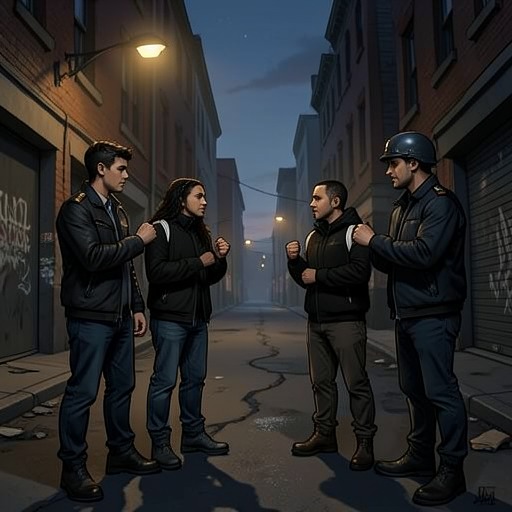
Riff leads the Jets through their neighborhood, where their aggression is not limited to a particular grievance. They harass drivers and passersby and treat their territory as something they can defend through intimidation, revealing how gang belonging has become bound up with violence.
That evening
The Jets Attack a Grocery
When the Jets spot an older Puerto Rican couple leaving a neighborhood grocery, the couple retreats inside rather than risk confronting them. [Riff](entity:character-recall-character-riff-8f4aa26eeacc) signals Snowboy, who throws a stink bomb into the crowded shop.
The attack is one more act of harassment in the conflict between the gangs. The Jets treat the shopkeeper and his customers as representatives of an enemy group, and the insult gives [Bernardo](entity:character-recall-character-bernardo-772d6a8ed262) and the Sharks another reason to retaliate.
Shortly after the grocery attack
Schrank Confronts the Jets
Lieutenant [Schrank](entity:character-recall-character-schrank-19bf4ebe8e46) and Officer [Krupke](entity:character-recall-character-krupke-f0503047987a) stop the Jets and question them about the stink bomb. [Riff](entity:character-recall-character-riff-8f4aa26eeacc) protects the gang's armed member by diverting attention from him and answers the police with taunts and evasions.
Schrank orders the Jets to stay on their own block and stop provoking the Sharks. His contempt for both gangs and his threats of force reinforce the sense that law enforcement is another hostile authority, not a trusted source of help.
That night
Maria Nunez on the Rooftop
Seeking quiet away from her crowded family apartment, [Maria Nunez](entity:character-recall-character-maria-nunez-0e07a3f1b4cd) watches the city from the roof. She imagines the wealth and freedom represented by distant buildings and wonders whether she can become fully American in her new home.
[Bernardo](entity:character-recall-character-bernardo-772d6a8ed262) finds her and warns that the streets and rooftops are unsafe, especially for a young Puerto Rican woman. [Maria](entity:character-recall-character-maria-de0c38967fe7) questions why the gangs must hate one another, but Bernardo answers with plans for revenge against the Jets and insists that she stay under his protection.
The evening before the planned duel
The Challenge at the Dance
[Riff](entity:character-recall-character-riff-8f4aa26eeacc) decides that the neutral dance at the [Municipal Community Center](entity:location-recall-location-921f0d961bc3) is the best place to find [Bernardo](entity:character-recall-character-bernardo-772d6a8ed262) and challenge him. He insists that the Jets arrive looking as though they have come to dance, not to start a fight.
The plan lets Riff present himself as a confident leader, but it also brings both gangs into a crowded public space where their hostility will be difficult to contain. He decides that [Tony Wyzek](entity:character-recall-character-tony-wyzek-fdd91d91eee3) should stand beside him when he confronts Bernardo.
Before the dance
Riff Asks Tony to Return
[Riff](entity:character-recall-character-riff-8f4aa26eeacc) finds [Tony Wyzek](entity:character-recall-character-tony-wyzek-fdd91d91eee3) working behind [Doc's drugstore](entity:location-recall-location-doc-033f5724f089) and explains that the Sharks have made the neighborhood increasingly dangerous. He wants his old friend to accompany him to the dance and help negotiate the confrontation.
Tony resists, describing his desire to find a life beyond the Jets and their violence. But when Riff appeals to their friendship and the gang's need for him, Tony agrees to attend, even as he senses that the decision may have lasting consequences.
The evening of the dance
Maria Nunez Prepares Her Dress
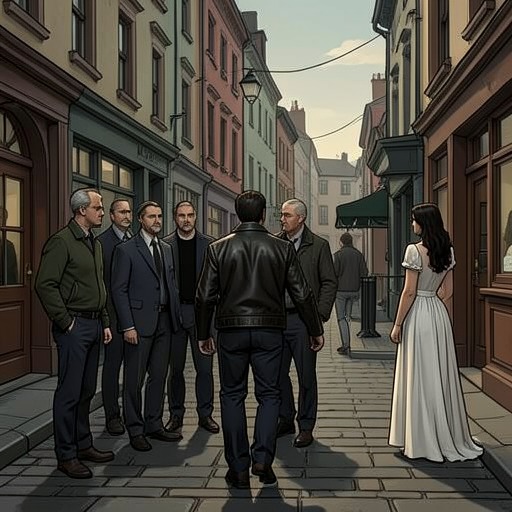
At the [Wedding shop](entity:location-recall-location-f6b70b4acfbc), [Maria Nunez](entity:character-recall-character-maria-nunez-0e07a3f1b4cd) asks [Anita Palacio](entity:character-recall-character-anita-palacio-d7ab1fc17bc3) to alter her white dress for the dance. She wants a lower neckline and a more fashionable hem, while [Anita](entity:character-recall-character-anita-cf1dee59b2b3) worries that [Bernardo](entity:character-recall-character-bernardo-772d6a8ed262) will disapprove of any change that makes [Maria](entity:character-recall-character-maria-de0c38967fe7) look older.
The conversation reveals how strongly Maria wants a life of her own. She confesses that she does not love Chino in the way she hopes to love someone, while Anita describes the passion she feels for Bernardo and teases Maria about the difference between affection and desire.
That evening
The Community Center Fills
[Murray Benowitz](entity:character-recall-character-murray-benowitz-e3ff933d92d8) watches teenagers gather for a dance at the [Municipal Community Center](entity:location-recall-location-921f0d961bc3), encouraged by the unusually strong turnout. The Jets and Sharks arrive separately and occupy opposite sides of the floor, each group treating the other as an enemy even under the center's rules.
Benowitz hopes that music and organized activities can draw young people away from the streets. His optimism is fragile: the police presence and the rival gangs' postures make clear that the dance is only temporarily holding back the violence.
During the dance
The Forced Circle Dance
Benowitz tries to break the separation between the gangs by arranging a dance in which the boys and girls will meet across the two circles. With [Krupke](entity:character-recall-character-krupke-f0503047987a) watching, the teenagers follow the instructions, but the Jets and Sharks refuse to engage naturally with one another.
[Riff](entity:character-recall-character-riff-8f4aa26eeacc) rejects the girl from the rival group and calls Graziella over instead. [Bernardo](entity:character-recall-character-bernardo-772d6a8ed262) responds by recalling [Anita Palacio](entity:character-recall-character-anita-palacio-d7ab1fc17bc3), and the brief attempt at integration collapses into renewed hostility.
Later that evening
Tony and Maria Meet
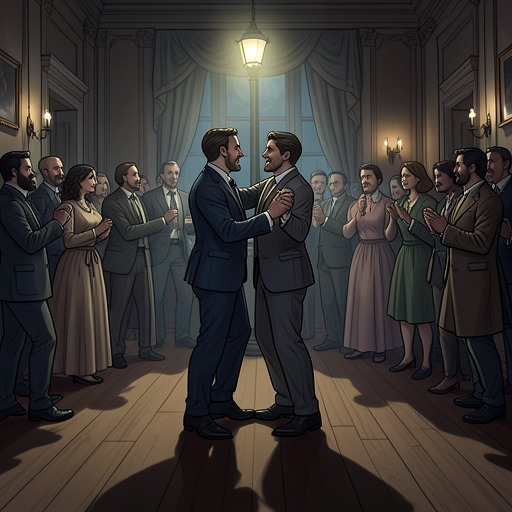
At the dance, [Tony Wyzek](entity:character-recall-character-tony-wyzek-fdd91d91eee3) sees [Maria Nunez](entity:character-recall-character-maria-nunez-0e07a3f1b4cd) in her white dress, and both are immediately drawn to one another. They dance apart from the rivalry around them, sensing a private world of tenderness and possibility beyond the crowded room.
They speak about the feeling that something important has been missing from their lives. Their immediate trust and attraction make the encounter seem like the answer each has been waiting for, while their different gang and ethnic affiliations make the new love dangerous from its beginning.
Moments after Tony Wyzek and Maria Nunez meet
Bernardo Interrupts the Dance
[Bernardo](entity:character-recall-character-bernardo-772d6a8ed262) discovers [Tony Wyzek](entity:character-recall-character-tony-wyzek-fdd91d91eee3) dancing with his sister and orders him away. [Maria](entity:character-recall-character-maria-de0c38967fe7) defends Tony, insisting that he has done nothing wrong, but Bernardo sees the encounter as a threat and takes her from the dance.
Tony and [Riff](entity:character-recall-character-riff-8f4aa26eeacc) answer Bernardo's insults, and the two gangs gather at the edge of a fight. Bernardo blames the Americans for ruining the evening, while Tony's attention remains fixed on Maria as she is led away.
Later that night
The Gangs Arrange a Duel
[Riff](entity:character-recall-character-riff-8f4aa26eeacc) and [Bernardo](entity:character-recall-character-bernardo-772d6a8ed262) agree to meet at the [Coffee Pot](entity:location-recall-location-coffee-pot-cfb3f20c1204) and settle the territorial conflict. They choose the following night and discuss a location and weapons, each leader determined not to appear weak in front of his gang.
Tony arrives as the two sides debate the terms. He challenges both gangs to fight fairly with their fists, and they agree that [Diesel](entity:character-recall-character-diesel-011460aeb1ae) will represent the Jets against Bernardo, postponing the confrontation until the next night.
At the Coffee Pot meeting
Schrank Disrupts the Meeting
[Schrank](entity:character-recall-character-schrank-19bf4ebe8e46) enters the [Coffee Pot](entity:location-recall-location-coffee-pot-cfb3f20c1204) and orders the Sharks to leave, then taunts the Jets and insults their families and immigrant backgrounds. His intervention prevents the agreement from turning into an immediate fight but deepens the hostility between the gangs and the police.
After the Sharks depart, [Riff](entity:character-recall-character-riff-8f4aa26eeacc) asks Tony why he did not volunteer to fight [Bernardo](entity:character-recall-character-bernardo-772d6a8ed262). Tony resents the expectation that he will return to the gang's violence, and the friends part in anger rather than resolving the conflict between loyalty and independence.
The following day
Maria Nunez Awaits Tony
While preparing for the planned duel, [Tony Wyzek](entity:character-recall-character-tony-wyzek-fdd91d91eee3) and [Maria Nunez](entity:character-recall-character-maria-nunez-0e07a3f1b4cd) meet privately at the [Wedding shop](entity:location-recall-location-f6b70b4acfbc). [Maria](entity:character-recall-character-maria-de0c38967fe7) tells him that she cannot accept a fight between the gangs, and Tony promises that he will stop it.
They imagine meeting each other's parents and speak of a future together. Tony's playful proposal to marry Maria makes their devotion feel certain, though his promise to prevent the duel will prove harder to keep than either of them expects.
Saturday night
The Duel Approaches
As the appointed hour nears, Tony prepares to meet [Maria](entity:character-recall-character-maria-de0c38967fe7) after stopping the fight. His mother, [Mrs. Wyzek](entity:character-recall-character-mrs-wyzek-d471566cbeec), is pleased that he has become a steady worker and appears closer to the son she hoped he would be.
Meanwhile, [Riff](entity:character-recall-character-riff-8f4aa26eeacc) gathers the Jets and [Bernardo](entity:character-recall-character-bernardo-772d6a8ed262) assembles the Sharks. Bernardo checks his switchblade despite the agreement to fight fairly, keeping the possibility of lethal violence close at hand.
Saturday night, near the agreed hour
The Sharks Gather at the Overpass
The gangs meet at the appointed ground beneath the overpass, with both sides tense and suspicious. [Diesel](entity:character-recall-character-diesel-011460aeb1ae) and [Bernardo](entity:character-recall-character-bernardo-772d6a8ed262) prepare to fight, while the others gather around them and watch for signs of treachery.
Bernardo refuses [Riff](entity:character-recall-character-riff-8f4aa26eeacc)'s offered handshake, declaring that he will not pretend to be friendly with people he hates. The rejected gesture exposes how little the supposed rules of a fair fight can do against the antagonism that brought the gangs there.
At the start of the confrontation
Tony Interrupts the Duel
Just as [Diesel](entity:character-recall-character-diesel-011460aeb1ae) and [Bernardo](entity:character-recall-character-bernardo-772d6a8ed262) trade blows, [Tony Wyzek](entity:character-recall-character-tony-wyzek-fdd91d91eee3) arrives and steps between them. He argues that neither gang has a good reason to keep fighting and offers Bernardo his hand in a gesture of peace.
Bernardo knocks Tony down and mocks his refusal to fight. Tony tries to explain himself, but the crowd interprets his restraint as cowardice, and the pressure to prove manhood through violence begins to overwhelm the fragile possibility of stopping the confrontation.
Moments after Tony interrupts the duel
Riff and Bernardo Draw Knives
[Bernardo](entity:character-recall-character-bernardo-772d6a8ed262) continues humiliating Tony, while [Riff](entity:character-recall-character-riff-8f4aa26eeacc) watches his friend endure the insults and feels the Jets' respect for him slipping away. Unable to tolerate the scene, Riff attacks Bernardo and draws his own knife.
The intended fistfight gives way to a deadly contest. The other gang members crowd close, and the earlier agreement about fair combat disappears under anger and the need to answer each provocation.
During the knife fight beneath the overpass
Riff and Bernardo Are Killed
In the clash, [Bernardo](entity:character-recall-character-bernardo-772d6a8ed262) thrusts his blade into [Riff](entity:character-recall-character-riff-8f4aa26eeacc), killing him. Tony, seeing his closest friend fall, takes Riff's knife and charges Bernardo, stabbing him fatally in the side.
The two gangs scatter as police sirens approach. Tony runs from the scene in shock and grief, calling for [Maria Nunez](entity:character-recall-character-maria-nunez-0e07a3f1b4cd), while the deaths turn the feud into an irreversible tragedy.
Immediately after the deaths
The Jets Hide at the Scrapyard
As the police search the area, [Baby-John](entity:character-recall-character-baby-john-a5c199ea7d79) hides in a truck at the [Riverside car scrapyard](entity:location-recall-location-bc28ad69369d) with [A-Rab](entity:character-recall-character-a-rab-8f0781597a31). He mourns [Riff](entity:character-recall-character-riff-8f4aa26eeacc) and struggles to understand how the confrontation ended with two young men dead.
Baby-John imagines comic-book heroes coming to rescue him, then tries to make sense of the danger by proposing that the gang hide and keep silent. The fantasy gives way to the [Jets' code of silence](entity:rule-recall-rule-jets-3d8dc63af769) as they wait for [Action](entity:character-recall-character-action-6a507b47665b) to take charge.
After the fight, before dawn
Chino Retrieves the Pistol
[Chino Martin](entity:character-recall-character-chino-martin-dda3bc08adca) learns that [Tony Wyzek](entity:character-recall-character-tony-wyzek-fdd91d91eee3) killed [Bernardo](entity:character-recall-character-bernardo-772d6a8ed262) and resolves to avenge him. He goes to the Nunez apartment and retrieves the pistol Bernardo had hidden behind the bathtub.
Armed and consumed by grief, Chino sets out to find Tony. His decision extends the same chain of retaliation that has already claimed Bernardo and [Riff](entity:character-recall-character-riff-8f4aa26eeacc), placing [Maria Nunez](entity:character-recall-character-maria-nunez-0e07a3f1b4cd)'s new love in immediate danger.
After Chino leaves the apartment
Maria Reunites with Tony
Tony returns to the Nunez apartment in a state of shock and tells [Maria Nunez](entity:character-recall-character-maria-nunez-0e07a3f1b4cd) that he killed [Bernardo](entity:character-recall-character-bernardo-772d6a8ed262) after Bernardo killed [Riff](entity:character-recall-character-riff-8f4aa26eeacc). [Maria](entity:character-recall-character-maria-de0c38967fe7) first strikes him in anger and disbelief, then collapses into his arms as she recognizes his grief.
Tony says he must turn himself in to the police, but Maria begs him to stay with her. They cling to their love as a refuge from the deaths, and she persuades him to rest before they decide what to do next.
Later that night
Maria Stops Tony from Leaving
Tony prepares to leave and surrender to the police, convinced that he deserves punishment. [Maria Nunez](entity:character-recall-character-maria-nunez-0e07a3f1b4cd) asks him to stay and reminds him of the future they imagined together only hours earlier.
Their earlier promise of marriage becomes an urgent attempt to preserve a life beyond the violence. Tony eventually agrees to go to [Doc's drugstore](entity:location-recall-location-doc-033f5724f089), where he hopes [Doc](entity:character-recall-character-doc-e89d0f1a3861) can help them find a way to escape.
While Tony is hiding
The Jets Decide to Find Tony
At the scrapyard, [Action](entity:character-recall-character-action-6a507b47665b) takes command of the surviving Jets and asks for a plan. [Diesel](entity:character-recall-character-diesel-011460aeb1ae) argues that Tony is responsible for [Riff](entity:character-recall-character-riff-8f4aa26eeacc)'s death, but [Anybodys](entity:character-recall-character-anybodys-4d32398872c7) reports that Chino has a pistol and is searching for him.
Action rejects the idea of letting the Sharks reach Tony first. Despite their anger and divided loyalties, the Jets agree to search for him and bring him back to their hiding place.
Later that night
Anita Seeks Doc's Help
[Anita Palacio](entity:character-recall-character-anita-palacio-d7ab1fc17bc3) leaves the Nunez apartment after [Maria](entity:character-recall-character-maria-de0c38967fe7) asks her to wait at [Doc's drugstore](entity:location-recall-location-doc-033f5724f089). She hopes to pass along a warning and get help for the couple, even though she is devastated by [Bernardo](entity:character-recall-character-bernardo-772d6a8ed262)'s death and angry at Maria's loyalty to Tony.
At the drugstore, [A-Rab](entity:character-recall-character-a-rab-8f0781597a31) and [Diesel](entity:character-recall-character-diesel-011460aeb1ae) block her from reaching [Doc](entity:character-recall-character-doc-e89d0f1a3861). Their suspicions and resentment turn her attempt to help into a frightening confrontation.
At Doc's drugstore, shortly after she arrives
Anita Is Attacked
[A-Rab](entity:character-recall-character-a-rab-8f0781597a31) harasses [Anita](entity:character-recall-character-anita-cf1dee59b2b3) and forces her down behind the counter while [Diesel](entity:character-recall-character-diesel-011460aeb1ae) encourages him. [Doc](entity:character-recall-character-doc-e89d0f1a3861) returns and intervenes before the assault can go further, then tells Anita to get home safely.
Shaken and enraged, Anita tells the Jets that [Maria](entity:character-recall-character-maria-de0c38967fe7) is dead, falsely claiming that Chino has killed her. She does so to punish the gang for what happened and to protect Maria from Tony, but the lie sends Tony into despair.
Immediately after Anita leaves the drugstore
Tony Believes Maria Is Dead
[Doc](entity:character-recall-character-doc-e89d0f1a3861) tells Tony that [Anita](entity:character-recall-character-anita-cf1dee59b2b3) has reported [Maria](entity:character-recall-character-maria-de0c38967fe7)'s death. Tony, already overwhelmed by guilt for killing [Bernardo](entity:character-recall-character-bernardo-772d6a8ed262), accepts the news and rushes into the streets, determined to find Chino and provoke him into killing him.
His decision turns the search into a desperate hunt. Tony no longer thinks of escape or a future with Maria; believing she is gone, he wants his own life to end.
Near the end of Saturday night
Tony Calls for Chino
Tony enters a courtyard in Puerto Rican territory and loudly calls for Chino, making himself an unmistakable target. [Anybodys](entity:character-recall-character-anybodys-4d32398872c7) finds him and tries to pull him to safety, but he pushes her away and continues shouting.
[Maria Nunez](entity:character-recall-character-maria-nunez-0e07a3f1b4cd) hears the commotion and runs toward Tony as Chino appears with [Bernardo](entity:character-recall-character-bernardo-772d6a8ed262)'s pistol. Tony is shot in the chest before anyone can stop the revenge he has deliberately sought.
Moments after Tony is shot
Maria Threatens Chino
[Maria](entity:character-recall-character-maria-de0c38967fe7) reaches Tony as he lies dying and understands that [Anita](entity:character-recall-character-anita-cf1dee59b2b3)'s claim was false. After Tony dies, she takes the pistol from Chino and points it at him, asking whether there are enough bullets to kill him and herself as well.
She accuses the whole community, including herself and her dead brother, of having helped destroy Tony. [Doc](entity:character-recall-character-doc-e89d0f1a3861) intervenes and urges Maria to go with him to tell Tony's mother, leaving the threat unresolved but making the human cost of the feud impossible to ignore.
After the deaths
The City Moves On
[Doc](entity:character-recall-character-doc-e89d0f1a3861) accompanies [Maria](entity:character-recall-character-maria-de0c38967fe7) to tell [Mrs. Wyzek](entity:character-recall-character-mrs-wyzek-d471566cbeec) that Tony has died. The killings become neighborhood news, but the wider city barely notices; its papers provide only brief and incomplete accounts.
Across [New York City](entity:location-recall-location-7a11f2949ca3), people continue their ordinary [Saturday night](entity:time-recall-time-saturday-night-52467f2617e5) lives, loving, grieving, and hoping beneath the same sky. The city endures beyond the lives it has consumed, and the novel closes on the prospect that its cycles of indifference and violence will continue unless something changes.